
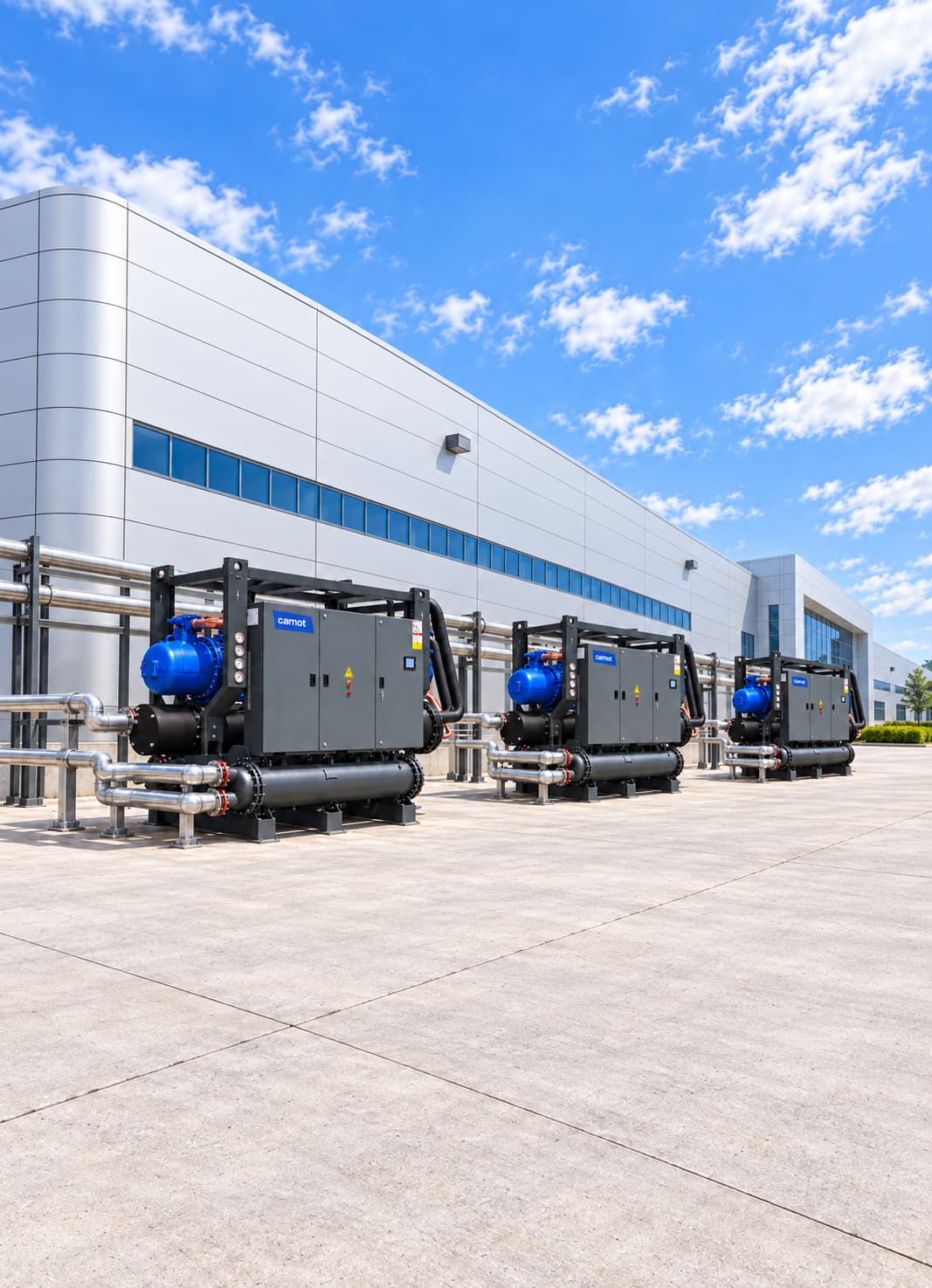

MOLDER Mould Conditioning and Temperature Control Unit
MOLDER provides 5–60 kW precision temperature control for injection moulds, supporting shorter cycles and consistent product quality.
Inside the series
The MOLDER Series is a mould-conditioning and process-temperature-control unit developed to bring moulds to the target temperature and keep them stable throughout plastic injection and mould-production processes. Available from 5 to 60 kW, the series manages controlled cooling, heating and fluid circulation within a single system.
During injection, the mould absorbs heat from the molten plastic in every cycle. This heat passes from the mould body to the cooling channels and then to the circulating water or water-glycol mixture. The MOLDER Series circulates the heat-transfer fluid through the mould channels in a controlled manner, removing the resulting thermal load and keeping the mould at its target operating temperature.
Mould temperature must not only be reduced; it must remain stable and balanced across the entire mould surface. Uneven temperature distribution can cause quality problems such as shrinkage, warpage, differences in surface gloss, sink marks and dimensional deviations. Precise temperature control helps preserve product quality, optimise cycle time and improve production repeatability.
In the MOLDER Series, the circulation pump, heating and cooling system, temperature sensors and control algorithm operate together. The controller continuously monitors the temperatures of the fluid supplied to and returning from the mould, automatically determining the heating or cooling capacity required. The mould is brought to operating temperature in a controlled manner at production start-up, and temperature deviations are limited throughout the process.
Flow rate, pump pressure and pressure loss in the mould circuit directly affect temperature stability. The MOLDER Series is selected specifically for the project by considering mould-channel design, connection diameters, required flow, operating temperature and process thermal load.
Carnot treats the MOLDER Series not simply as equipment that supplies cold water to a mould, but as process equipment that directly manages product quality, cycle time and production efficiency.
Numerical Production-Efficiency Example
As temperature rises in injection moulds, the cooling time required for the part to reach a suitable ejection temperature may increase. Technical sources indicate that every 1°C rise in mould temperature can extend cooling time by an average of approximately 2%.
Example production scenario: mould-temperature deviation is +5°C in the uncontrolled system and stable at the target temperature with MOLDER. The cooling stage falls from 22 to 20 seconds and total cycle time from 32 to 30 seconds. Theoretical hourly production rises from 112 to 120 parts.
In this example, reducing cycle time from 32 to 30 seconds increases theoretical production capacity by approximately 7%. On a line operating 20 hours per day, this difference may represent approximately 160 additional products per day.
Actual improvement must be calculated from part geometry, plastic material, mould weight, target temperature, cooling-channel design and the existing cycle time.
Technology and operation
PID control
Precision control designed to keep temperature deviation within ±1 °C.
Fluid selection
Water or oil circulation is selected for the process.
Operator interface
Digital display, automatic temperature control and safety systems.
Applications
MOLDER
Technical specifications
- Capacity
- 5–60 kW
- Control
- PID
- Temperature accuracy
- ±1 °C
- Circulation
- Water / oil
- Placement
- Machine-side / central
Capacity and operating temperatures are selected for your process load and site conditions.
Frequently asked questions
Answers to common technical questions about selection, application and operation.
Let's engineer solutions tailored to your needs
By analyzing your process and operational data against engineering criteria, we determine capacity, system configuration, and implementation details. Let's turn your technical requirements into the right equipment selection and an actionable system design.