

Industrial Process Cooling Solutions
From plastics to data centres, from food to power generation — cooling solutions designed around each sector's heat load, temperature tolerance and operating regime.
9 sectors
We start from the real load profile of the process, not from the equipment
The variables that define cooling demand differ in every sector: mould temperature, food safety, server inlet temperature or the stability of oil and hydraulic circuits. Choose your sector to see typical applications, engineering criteria and recommended Carnot products.

Plastics & Rubber
In mould cooling, temperature stability drives both cycle time and scrap rate.
Explore
Food & Beverage
Hygiene class, unbroken cold chain and certified air quality, together.
Explore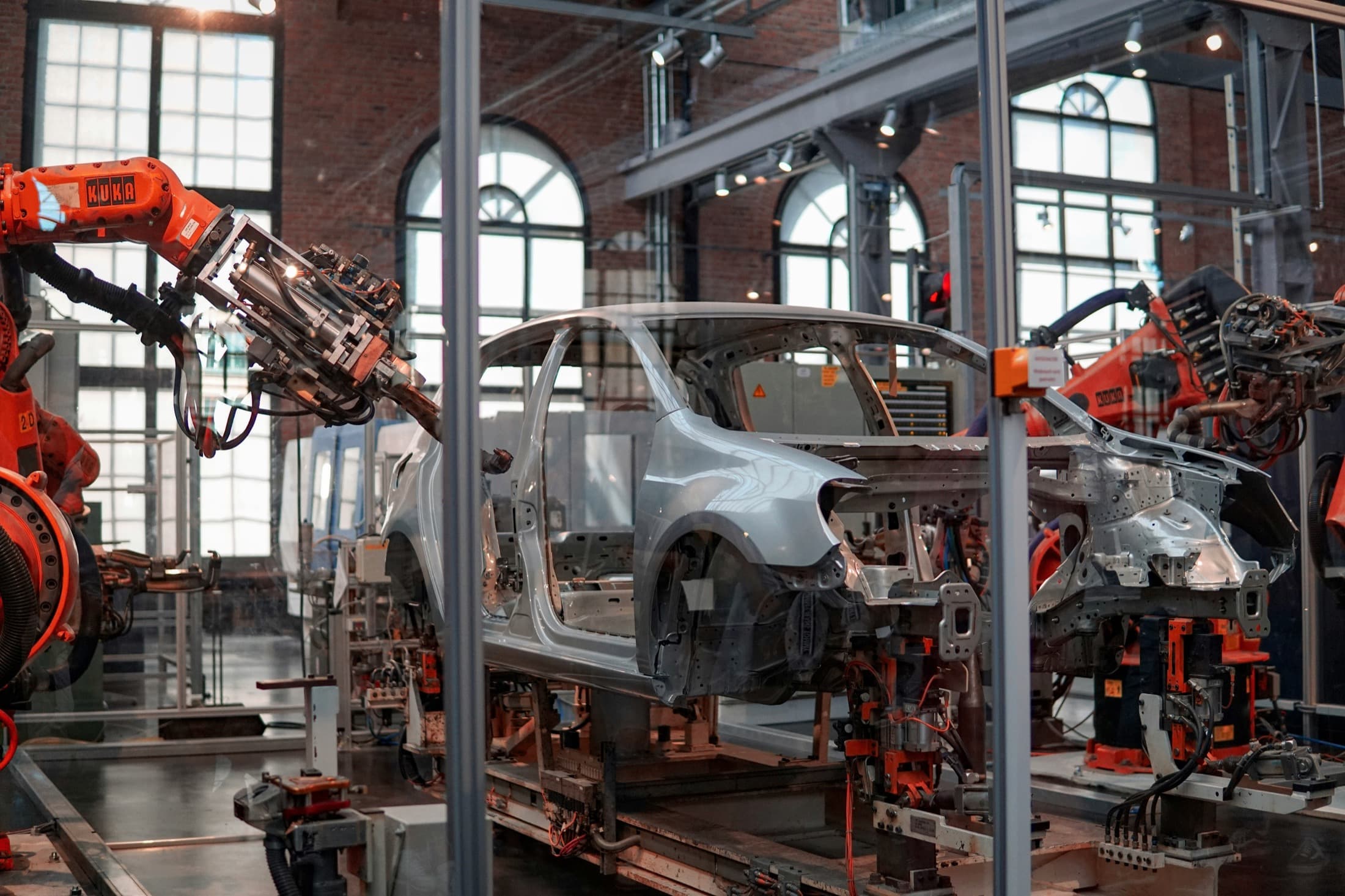
Automotive & Metalworking
High, swinging load profiles need capacity that tracks demand in real time.
Explore
Pharmaceutical & Chemical
Validation, traceability and redundancy are the starting point of the design.
ExploreTextile
In dyehouses and finishing lines, waste heat is a recoverable resource.
ExploreFoundry & Die Casting
Under heavy thermal load, equipment simply has to stay up.
Explore
Electronics & Data Centres
High availability and a low PUE target meet in the same design.
ExplorePower Generation Facilities
On generators, turbines and auxiliary systems, continuous cooling is continuous output.
ExploreCold Storage & Logistics
In large-volume warehouses, stable temperature has to hold through heavy dispatch traffic.
Explore
Typical cooling loads and systems by sector
A quick guide to where the heat comes from in each industry and the Carnot system we usually start from. Every project is then sized to the plant’s measured load.
- Plastics & Rubber
- Heat comes from the melt entering the mould and from hydraulic and oil circuits. Typical system: a process chiller working with Molder temperature control units for steady mould temperature, plus free cooling to carry part of the load without compressors in winter.
- Food & Beverage
- The load comes from cooling after cooking and pasteurisation, fermentation and product temperature before filling, with latent heat added where there is a phase change. Typical system: a water- or air-cooled chiller set to the leaving-water temperature the process exchanger needs.
- Automotive & Metalworking
- Machining spindles, laser sources, cutting fluids and hydraulic oil create loads that swing from minute to minute. Typical system: an air- or water-cooled chiller whose capacity tracks demand, with separate circuits for equipment that needs different temperatures.
- Pharmaceutical & Chemical
- Heat of reaction, condensing load and batch volume call for a time–temperature profile at the reactor jacket. Typical system: a redundant, tightly controlled Tundra water-cooled chiller with a secondary fluid circuit chosen for its viscosity at low temperatures.
- Textile
- Post-dyeing cooling and temperature control of coating and lamination rollers create loads that swing with every production changeover. Typical system: a chiller with buffer volume, combined with recovery of dyehouse waste heat.
- Foundry & Die Casting
- The heat transferred into the mould on each cycle, the mould’s thermal mass and the target cycle time set the cooling demand. Typical system: a Tundra water-cooled chiller sized for high-flow mould circuits, with start-up heating, steady production and shutdown built into the controls.
- Electronics & Data Centres
- The IT load from servers and network equipment runs 24/7, and AI workloads keep pushing density up. Typical system: N+1 redundant chillers with Fusion free cooling and Kalter dry coolers that run without compressors whenever outdoor air allows.
- Power Generation Facilities
- Heat from engines, generators and auxiliary equipment has to be removed continuously, whatever the season. Typical system: dry coolers sized for design outdoor conditions, backed by a chiller where the fluid temperature limit demands it.
- Cold Storage & Logistics
- Product load, heat through the building envelope, air infiltration from door openings and internal gains change throughout the day. Typical system: a Tundra or Thule chiller feeding separate temperature zones through a glycol secondary circuit.
Let's engineer solutions tailored to your needs
By analyzing your process and operational data against engineering criteria, we determine capacity, system configuration, and implementation details. Let's turn your technical requirements into the right equipment selection and an actionable system design.